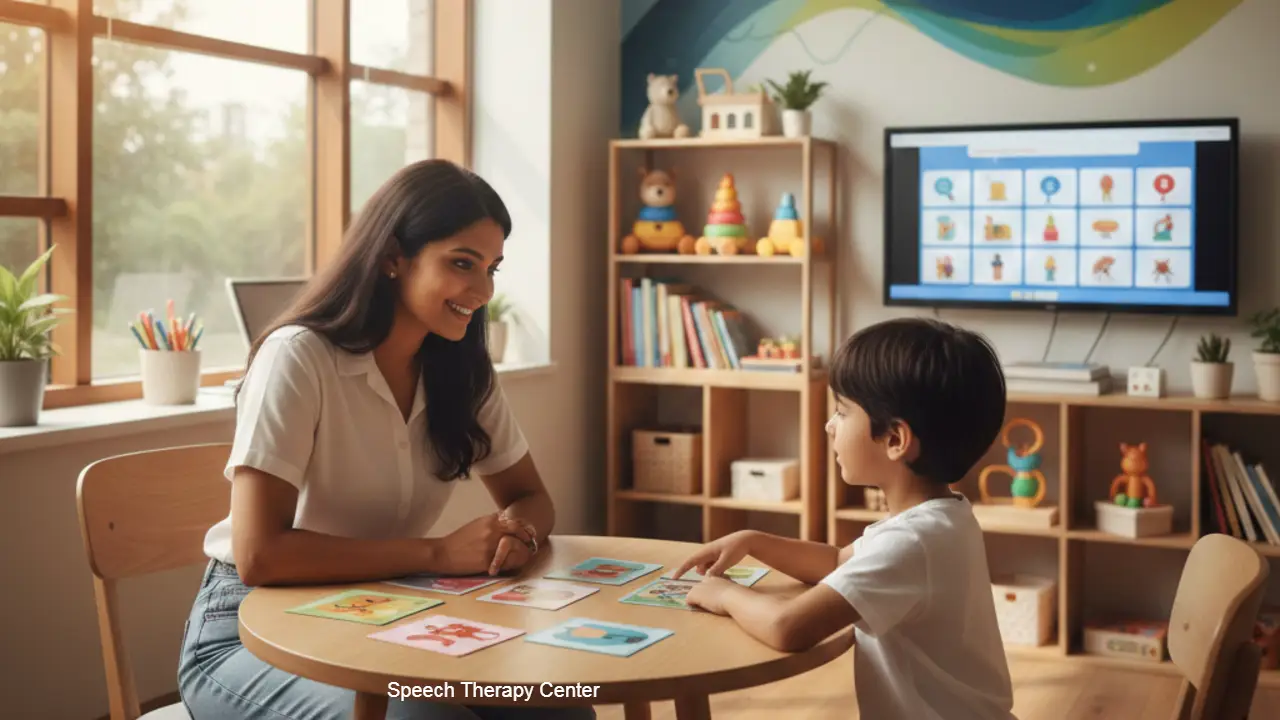

A child’s formative years are a dynamic time full of amazing possibilities and astonishing development. This critical window presents an unmatched chance for significant positive progress for young students starting on unique developmental paths, especially those with developmental delays, attention-deficit/hyperactivity disorder (ADHD), or autism spectrum disorder (ASD). The development of crucial communication, social, cognitive, and adaptive skills is made possible by early intervention, which emerges as a potent and transformative force during this period of extraordinary brain neuroplasticity, when the brain is most flexible and responsive to experience.
This blog post will highlight behavioral therapy’s critical role as a cornerstone of highly successful early intervention programs in child development centers, highlighting its fundamental ideas, solid body of research, and useful applications in fostering these critical skills and pointing kids in the direction of prosperous futures.
Literature Overview or Theoretical Background
The foundation of behavioral therapy is found in well-established learning theories. The foundation of it is Operant Conditioning, which was developed by B.F. Skinner and describes how actions are influenced by their outcomes. Extinction, or the deliberate removal of reinforcement, can reduce undesirable behaviors, while positive reinforcement enhances desired ones. This framework offers a methodical and scientific way to comprehend and modify young children’s behavior.
Specific behavioral strategies for older kids in this age range, or for co-occurring emotional regulation goals, may also benefit from Cognitive Behavioral Therapy (CBT) in addition to direct operant principles. In order to address how thoughts impact feelings and behaviors, cognitive behavioral therapy (CBT) combines behavioral tactics with cognitive strategies that are tailored for younger cognitive levels. Using the brain’s malleability during these early years to promote adaptive development is always the common theme in behavioral therapy for early intervention.
Table of Contents
ToggleKey Concepts and Principles in Early Intervention Behavioral Therapy
The success of early behavioral intervention hinges on systematically applying foundational principles:
Reinforcement: The main mechanism behind behavior change is reinforcement. Positive reinforcement in early intervention refers to giving something desirable (such as targeted praise, a favorite toy, or a quick, entertaining activity) just after a desired behavior takes place. This continuously promotes the practice of abilities like making eye contact, communicating, obeying directions, and playing independently.
Prompting: Therapists provide various types of prompts (e.g., physical guidance, gestures, verbal cues, visual aids) to guide children towards correct responses. This assistance helps children learn to perform desired behaviors. This technique is especially effective for teaching early academic, communication, and self-help skills.
Shaping: This technique involves rewarding progressively closer approximations of the intended behavior when a youngster is still unable to execute a complex skill flawlessly. In early language development, for example, a therapist may reinforce a word-like sound initially, followed by a partial word, and subsequently the entire word.
Generalization: To ensure that the child can effectively use their newly acquired skills in real-world situations, skills acquired in a particular therapeutic setting are purposefully practiced and reinforced in a variety of settings (home, school, playground), with a variety of people, and with a variety of materials.
Current Research and Findings in Early Intervention
Numerous studies highlight the significant benefits of behavioral therapy in the early stages of developmental condition intervention:
Autism Spectrum Disorder (ASD): Decades of studies on intensive behavioral interventions for young children with ASD consistently demonstrate significant gains in cognitive abilities, language acquisition, adaptive behavior, and social skills (e.g., research by Lovaas, Eldevik, and others). These comprehensive behavioral approaches, when initiated early and delivered intensively, have shown to lead to better long-term developmental outcomes, including improved educational placements.
Attention-Deficit/Hyperactivity Disorder (ADHD): For preschoolers and early elementary children with ADHD, behavioral interventions, particularly behavioral parent training and structured classroom management strategies, are often recommended as a primary treatment. Research indicates that these early behavioral interventions can significantly reduce disruptive behaviors, improve compliance, and enhance social skills, often before medication is considered or as a complementary approach.
Developmental Delay (DD): For young children experiencing delays across multiple developmental domains, individualized behavioral therapy principles are adapted to target specific skill deficits. By applying reinforcement, shaping, and prompting, early intervention programs can systematically address delays in communication, motor skills, cognitive development, and social-emotional regulation, facilitating overall developmental progress.
Practical Applications in Early Intervention Centers
In a child development center serving young children, behavioral therapy is highly personalized and integrated into daily routines:
Individualized Programming: Goals are established collaboratively with families and integrated into plans like infants/toddlers or Individualized Education Plans (IEPs) for preschoolers/school-aged children. These plans outline specific, measurable behavioral objectives.
Therapeutic Delivery Methods:
- Structured Teaching: Often involves breaking down skills into small components and teaching them in a systematic way to build foundational abilities.
- Naturalistic Teaching: Embedding learning opportunities within natural play and daily routines to promote spontaneous skill use and generalization in real-world contexts.
- Visual Supports: Tools like visual schedules, ‘first/then’ boards, and social stories are widely used to enhance comprehension, promote predictable routines, and aid transitions for young children.
- Positive Behavior Support (PBS): A proactive, comprehensive framework based on FBA to prevent challenging behaviors by creating supportive environments and teaching appropriate replacement behaviors.
Challenges and Gaps in Early Intervention Research
Early Identification & Access: Ensuring timely and accurate identification of developmental concerns and equitable access to high-quality early intervention services for all families, particularly in diverse socioeconomic and geographic contexts.
Generalization and Long-Term Maintenance: While immediate developmental gains are significant, ensuring the consistent generalization of skills across varied settings and their sustained maintenance into later childhood and adolescence remains a complex area of study.
Addressing Comorbidity: Many young children present with complex co-occurring conditions (e.g., anxiety, sleep difficulties, feeding issues) alongside their primary diagnosis, requiring integrated and nuanced behavioral and psychological approaches.
Culturally Responsive Practice: There is a continuous need for research and adaptation of behavioral intervention models to be culturally sensitive, linguistically appropriate, and relevant for diverse families and communities, particularly in multi-cultural settings.
Balancing Structure and Naturalism: Ongoing investigation into the optimal blend between highly structured teaching and more naturalistic, play-based approaches to maximize both rapid skill acquisition and spontaneous social development.
Workforce Development: Ensuring a sufficient supply of highly trained, ethical early intervention behavioral therapists and addressing issues like professional training, supervision, and burnout.
Implications or Recommendations
The robust evidence base for behavioral therapy in early intervention carries critical implications for all stakeholders involved in a child’s development:
- For Practitioners: Emphasize continuous professional development in advanced behavioral strategies, advocate for and utilize a data-driven approach for individualized programming, and foster seamless collaboration within multidisciplinary early intervention teams (e.g., with speech-language pathologists, occupational therapists).
- For Parents/Caregivers: Actively seek out and engage in parent-training components offered by early intervention programs. Consistency in implementing behavioral strategies at home is paramount to maximizing positive outcomes.
- For Policy and Centers: Prioritize and advocate for increased funding and resources dedicated to accessible, high-quality, and intensive early behavioral intervention services. Support ongoing research into effective, culturally adapted interventions, and expand comprehensive training programs for early intervention specialists.
Conclusion
All things considered, behavioral treatment, when administered through carefully planned early intervention programs, is extremely important in changing the developmental paths of young children with global developmental delays, ADHD, and autism spectrum disorder. It enables kids to realize their greatest potential by methodically developing fundamental skills, dealing with problematic behaviors, and encouraging social interaction and communication during a time when brain plasticity is at its highest. The most effective investment in creating better futures for these worthy kids will remain our shared dedication to prompt identification, evidence-based practice, and all-encompassing, cooperative early intervention.
References / Further Reading
- Dawson, G., et al. (2010). Randomized, controlled trial of an intervention for toddlers with autism: the Early Start Denver Model. Pediatrics, 125(1), e17-23.
- Eldevik, S., et al. (2009). Meta-analysis of early intensive behavioral intervention for young children with autism. Journal of Clinical Child and Adolescent Psychology, 38(3), 439-447.
- Lovaas, O. I. (1987). Behavioral treatment and normal educational and intellectual functioning in young autistic children. Journal of Consulting and Clinical Psychology, 55(1), 3-9.
- Pelham, W. E., et al. (2016). A behavioral parent training program for parents of children with ADHD: Outcomes of a randomized controlled trial. Journal of Consulting and Clinical Psychology, 84(4), 316-328.
- Skinner, B. F. (1953). Science and Human Behavior. Macmillan.
- R.Khyati a Psychologist and Trauma – Informed Trainee Expressive Art Therapist ( UNESCO – CID) .