Table of Contents
ToggleWhat is occupational therapy for children
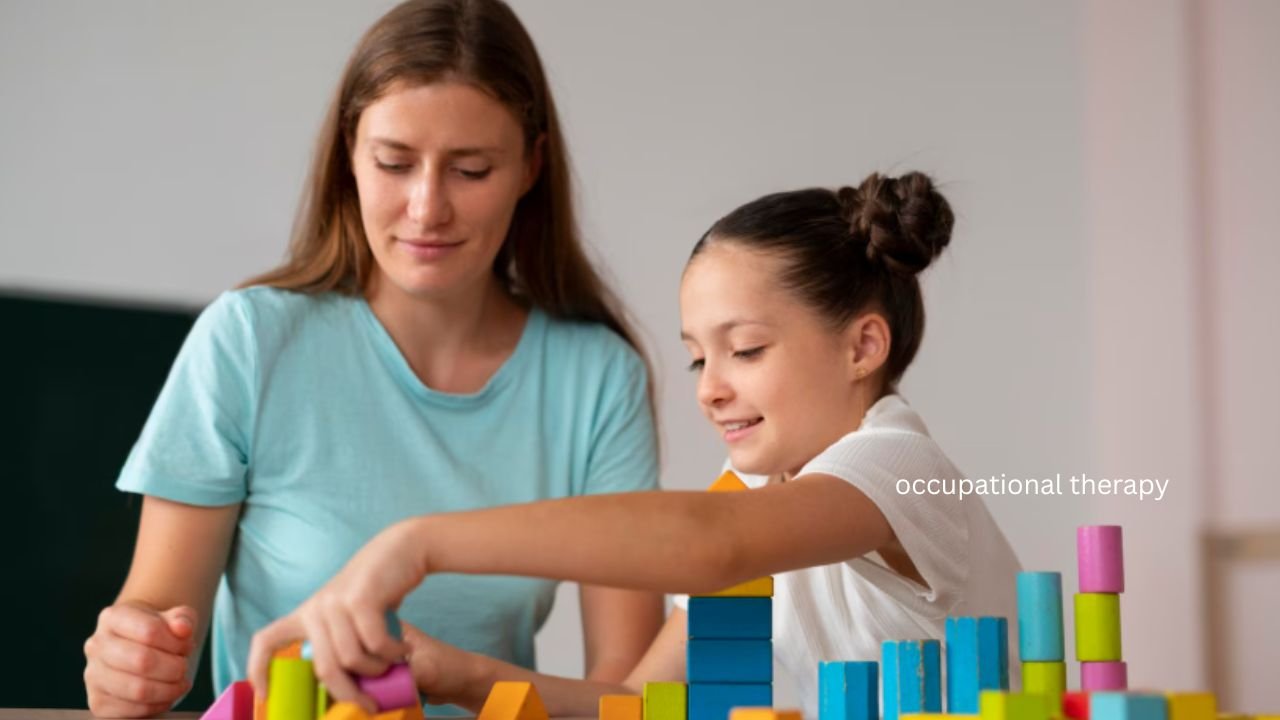
Occupational therapy is the therapeutic use of self-care, work and play activities to:
1) increase independent function
2) enhance development
3) and prevent disability.
How can the occupational therapist conduct the OT program
1) Since the work of children is play, it is through the use of this media that occupational therapists assist children in learning the skills necessary for living.
2) Concerns often addressed by pediatric occupational therapists include:
- a. self–care skills (feeding, bathing, dressing),
- b. fine motor skills (hand skills and dexterity), c. Neuro motor development,
- d. sensory integration,
- e. and play skills.
3) Therapy that occupational therapist can:
- a. enhance the potential of a child throughout their developmental years
- b. build skills, self–confidence, and self–esteem that lasts a life time.
What is the role of Occupational Therapy in Pediatrics?
- Occupational therapists working with children strive to optimize a child’s occupational performance. Children span the age range of birth through adolescence.
- II. Occupational therapists have think what a variety of occupations have to be engaged in during this period of time in life.
III. Consider how these occupations become increasingly complex during childhood and how they formed an important foundation for the roles you play as an adult today.
The primary occupations of children are considered to be:
1) Activities of Daily Living (feeding, toileting, dressing, grooming, mobility)
2) Learning and school performance.
3) Vocation or performance in a workplace.
Occupational Therapy Practice:
Assessment
Assessment Tools
The following is a list of assessment tools typically administered by the occupational therapists in the First Step Rehabilitation Centre.
- Performance Components
- Performance Areas
- Non-standardised Assessment/Clinical
Observation Assessment Strategies and Tools : Occupational performance is influenced by the dynamic relationship of
- person,
- occupation
- and environment.
The First Step in a Rehabilitation Centre the occupational therapist must consider all aspects of this relationship when performing an assessment.
The occupational therapist assesses and considers factors within the child, the environment, and occupation to determine what changes or adaptations are needed in any of these areas to improve the desired occupational performance and success.
Occupational therapists can help children:
1) Decrease developmental delays.
2) Improve writing and drawing skills.
3) Improve oral–motor strength.
4) Decrease oral–motor (structural) tightness.
5) Improve overall strength.
6) Improve overall coordination.
7) Improve visual perceptual skills.
8) Improve grasp and fine motor skills.
9) Improve self–dressing, feeding, and grooming skills.
10) Assist with increasing overall internal organization, focus, and attention.
11) Improve sensory motor processing abilities.
12) Desensitise children to their difficulties and instill confidence, trust, and self–esteem!
What areas does OT address?
- Developmental Delays
- Attention Deficit and focus
- Writing problems
- Self dressing/grooming (Activities of Daily Living)
- Strengthening – general and specific
- Gross motor concerns
- Coordination difficulties
- Sensory motor processing
- Perceptual difficulties
- Oral motor weakness
- Fine motor concerns
What can OT offer the child?
- i. Developmental screening/testing
- ii. Visual motor testing iii. Therapeutic monitoring iv. Visual perceptual testing v. Sensory integration services vi. Oral motor strengthening vii. Oral motor stretching Reasons Might Refer a Child for Occupational Therapy.
1) Poor sensory regulation and organization
2) Delayed gross and/or fine motor skills
3) Poor pre–writing and handwriting skills
4) Difficulty with motor planning and sequencing activities
5) Delayed or limited repertoire of play skills
6) Poor oral–motor control for feeding (sucking, chewing, swallowing)
7) Delayed or limited self–care skills (i.e., managing clothing fastenings, self–feeding, preparing a simple snack, managing money)
8) Limited social skills or behavioural-adaptive skills as:
- II. coping skills, establishing friendships, III. cooperative play with peers The core value of pediatric occupational therapy is:
- providing family–centered care and service.
- The needs, desires, and values of the child and family drive the direction of our assessments and intervention.
- The focus of occupational therapy intervention directly reflects the child’s and/or family’s priorities.
Performance Components
- Peabody Developmental Motor Scales Age range: Birth – 7 years Evaluates gross and fine motor skill development
- Bruininks–Oseretsky Test of Motor Proficiency (Bruininks, 1978) Age range: 4 1/2 – 14 1/2 years Evaluates the proficiency of gross and fine motor skill performance
- Developmental Test of Visual Motor Integration (Berry, 1996) – VMI Age range: 2 – 15 years
- Evaluates the integration of visual motor and visual perceptual skills for purpose of early identification of learning difficulties
- Yields standard scores, percentile rank, and age equivalency scores Performance Areas.
- 1- Pediatric Evaluation of Disability.
- Inventory Age range: 1 month – 7 years Evaluates the child’s functional skill ability and degree of caregiver assistance in three domains: self–care, mobility, and social function Yields a normative standardized score in each domain; totals for frequency task modification and caregiver assistance may be calculated.
2- School Function Assessment – SFA Age range: kindergarten – 6th grade Evaluates functional performance in the elementary school setting which includes: participation in school activity settings, amount of assistance and adaptation for task performance, and performance in nine physical task areas and twelve cognitive/behavioral task areas.
3- Sensory Profile (Dunn, 1999) Age range: recommended for 5 – 10 years (may be used for children 34 years)
A caregiver questionnaire designed to help the occupational therapist gain understanding of a child’s sensory processing during daily routines (i.e., hyper–responsive or hypo–responsive to certain sensory events). This includes how the child tends to respond to stimuli and which sensory systems may be creating barriers to functional performance.
Non standardized Assessment/Clinical Observation
1- Neuro musculoskeletal Evaluation: Clinical observation of muscle tone, joint range of motion, automatic balance responses, posture, gait and physical strength
2- Play Skills Evaluation: Informal evaluation of play interactions may be set up during the assessment. This is used to observe functional use of motor skills in play, and play occupations such as independent initiation, use of toys, symbolic play, creativity and imagination, and enjoyment of play. There are a limited number of occupational therapy play assessment tools, and those are largely designed for administration in the child’s functional environment of home or school.
3- Oral–motor and Feeding Evaluation: This may include the assessment of the oral structures, oral–motor control (suck, swallow, and chew), behavioral responses during feeding, parent/child interaction, and self–feeding skills.
Intervention Strategies Occupational therapists provide intervention to children using one of five approaches.
- Establish/Restore The occupational therapist identifies the deficits and creates strategies to remedy the problem.
- Adapt The occupational therapist identifies adaptive strategies to work around the problem improve performance. When tasks, materials or environments are changed, an adaptive approach is being used.
- Alter The occupational therapist helps to identify an environment or physical arrangement that is more conducive for the desired occupational performance. In this situation adaptations are not made, but rather a more appropriate existing setting is identified.
- Prevent The occupational therapist helps to identify activities and contexts that will help prevent an undesired outcome.
- Create or Promote This approach is most frequently used in early intervention settings. For example the occupational therapist collaborates with families and other professionals to create an environment and routines to support optimal developmental progress and outcomes.
Example Model:
- Establish/ Restore; Shoulder and hand strengthening exercises to improve grasp of pencil and handwriting
- Adapt: Provide the child with a hand splint or adapted pencil grips.
- Alter; Develop a plan for the child to conduct all written assignments and tests using a computer.
- Prevent; Facilitate weight bearing and weight shifting through arms to support development of upper extremity strength Create; Develop an after school art class for children to practice fine motor coordination and social interaction through art References American Occupational Therapy Association.
Occupational therapy practice framework: domain and process, 3rd ed [Internet], 2013.
URL: http://tinyurl.com/qfpy9r5. Case–Smith J. Self–care strategies for children with developmental disabilities. In: Christiansen C, editor.
Ways of living: self-care strategies for special needs.
2nd ed. Bethesda: American Occupational Therapy Association; 2000. p. 83-122.
Herge EA. Beyond the basics to participation: occupational therapy for adults with developmental disabilities. OT Pract. 2003;8:CE1-8.
Jaffe L, Humphry R, Case–Smith J. Working with families. In: Case-Smith J, O’Brien J, editors. Occupational therapy for children.
6th ed. Maryland Heights: Mosby; 2010. p. 108-40.
Adams RC, Tapia C, The Council on Children with Disabilities. Early intervention, IDEA Part C services
and the medical home: collaboration for best practices. Pediatrics. 2013;132:e1073-88.
Christiansen CH, Matsuka KM. Ways of living: intervention strategies to enable participation.
4th Bethesda: American Occupational Therapy Association; 2011.
Practice Advisory on Occupational Therapy in Early Intervention.
AOTA practice advisory on the primary provider approach in early intervention.
Bethesda: American Occupational Therapy Association, 2014.
Elias ER, Murphy NA, The Council for Children with Disabilities.
Home care of children and youth with complex healthcare needs and technology dependence
Dr Kishore Kumar GoldMedal phd MOT .